
Sam Altman Wants AI on a Meter. What Happens When the Lights Go Out?
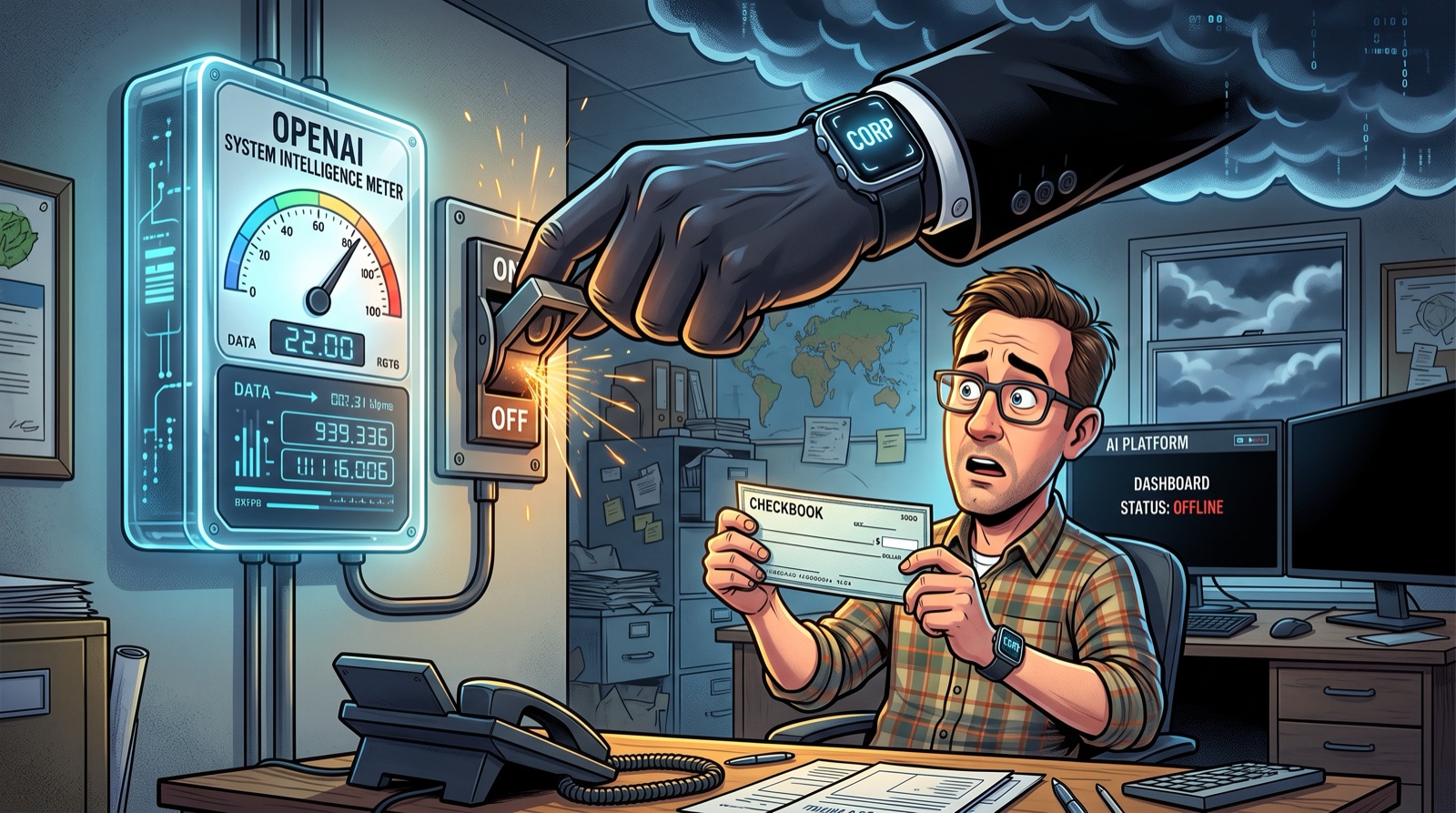
Take a look at what just happened in China. As the July 15 deadline for Beijing's new AI rules arrived, the country's most-used consumer AI apps quietly switched off the features at their heart — ByteDance's Doubao and Alibaba's Qwen cut their companion agents, and Shanghai's regulator pulled more than 14,000 non-compliant AI agents. Millions of people woke up to find the assistants they relied on gone, with only narrow windows to export their data before deletion.
It was a brutal, instant reminder of a harsh reality: if it lives in the cloud, you don't own it. You're just renting it.
And if you think that's just a “foreign country” problem, think again. Right here at home, the U.S. Commerce Department blocked access to Anthropic's newest Claude models over a cybersecurity concern — and because a cloud model can be switched off with a single directive, users were locked out for weeks until the restriction was lifted.
This is the exact nightmare every small-business owner dreads with Facebook Business Manager: an automated bot flags your account by mistake, freezes your ads, drops your revenue to zero — and there is no human to call. Now imagine that same glitch hitting the AI running your core operations.
The “Metered Utility” Trap
OpenAI's CEO, Sam Altman, recently said the quiet part out loud. He described a future where “intelligence is a utility, like electricity or water, and people buy it from us on a meter.”
But ask yourself: what happens when there's a blackout? If you build your company's brain entirely on someone else's public cloud, you're building on rented land.
The Danger of “Mechanical Stupidity”
Running a small business is messy — you cover a supplier on Friday, reconcile the ledger Monday. None of it is wrong; it's how founders survive. But the IRS and major banks now run AI models on your financial patterns, and those models have no common sense. They see a “pattern anomaly,” trip the alarm, and can freeze your business account while a human eventually gets around to reviewing it. Suddenly you're guilty-until-proven-innocent to a bot, and a two-week freeze can sink a healthy business.
Sovereign AI flips that. When you keep your own clean, timestamped, auditable ledger — your source of truth, on hardware you control — you're not hiding from the algorithm, you're ready for it. You can reconcile in real time, hold the context a bank never asks a human for, and prove a transaction was exactly what it looks like: honest business. It's accountability you hold, not accountability done to you.
Time to Bring Back the “Digital Checkbook”
So what's the solution? You can sign up for free cloud AI tools, wire your business to custom prompts, and hope for the best. Or you can take control.
Think back to before internet banking, when owners sat down and balanced a physical checkbook ledger. You didn't trust the bank blindly; you kept the book. You held the source of truth. We need that same discipline for AI.
Here's the part no keynote will tell you: most owners aren't scared of AI. They're scared of waking up to a frozen account, a locked ad manager, a tool that vanished overnight — and no human to call. It's that quiet dread of building your whole livelihood on something you don't control, something that can be switched off while you sleep.
You don't fix that with a better prompt. You fix it by owning the thing. Run capable open-source models — like Meta's Llama — on hardware you own. Keep your own clean, timestamped ledger. Build your guardrails into software you control. Then nobody can flip a switch on your business, and when an algorithm does come looking, the truth is already on your side.
That's not paranoia — it's the same discipline your grandparents had balancing a checkbook by hand. Own your hardware. Keep your own books. Protect your hustle. The lights stay on because you're the one holding the switch.
Sources
- China AI companion rules: Bloomberg; AI News.
- Commerce Dept. & Anthropic Claude: PBS NewsHour; SecurityWeek.
- Sam Altman “on a meter”: Tom's Guide.