Independent Privacy & Sovereignty Foundation

The beacon that reads
the threat before you do.

HecTec Labs rates devices and applications on privacy transparency and data sovereignty. The node is always live — its color tells you everything.

Signal Key

SovereignData stays with you — fully sovereign
ClearPrivacy aware — safe to use
WarningReview data flows before deploying
CriticalActive surveillance detected
Sovereign — Node Activehecteclabs.org
Scroll
HecTec Labs // Cyber Beacon Radar · Cyber Threat Map

Cyber Beacon Radar
for your ZIP code

See real-time privacy threats, surveillance nodes, credential leaks, and botnet activity targeting your metro area — powered by open-source intelligence.

🔒We do not capture, store, or sell your data. Ever.
Quick scan:

What we monitor

📡Botnet C2 Relays
🔓Exposed Gateways
💧Credential Leaks
🎣Phishing Clusters
📷Surveillance Nodes
🕳️Dark Web Activity
The Sovereign Standard
01

No Pixels. No Retargeting.

We never fingerprint, track, or monetize a visitor. The intellect is the funnel — the brand speaks for itself.

02

Local-First Custody

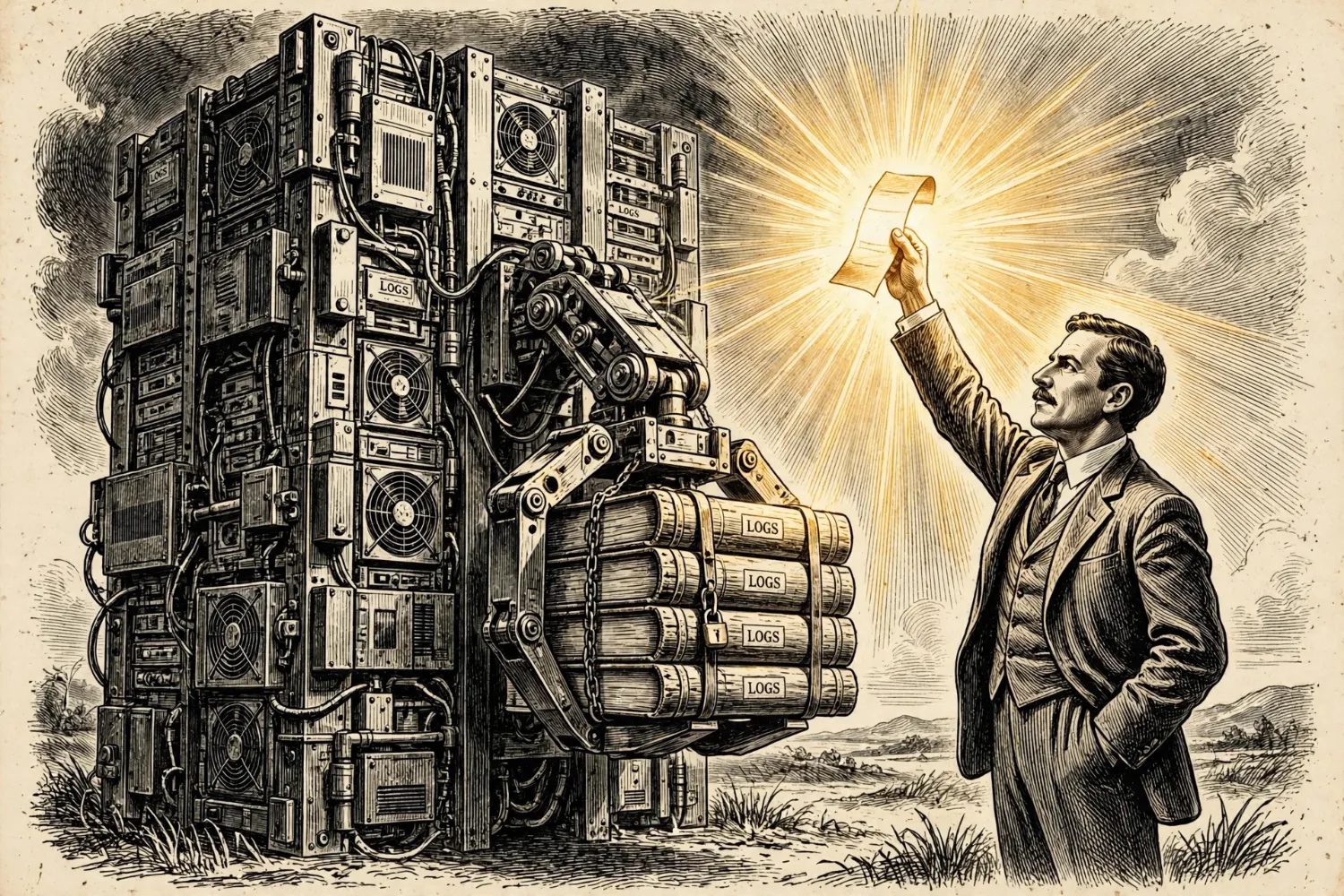
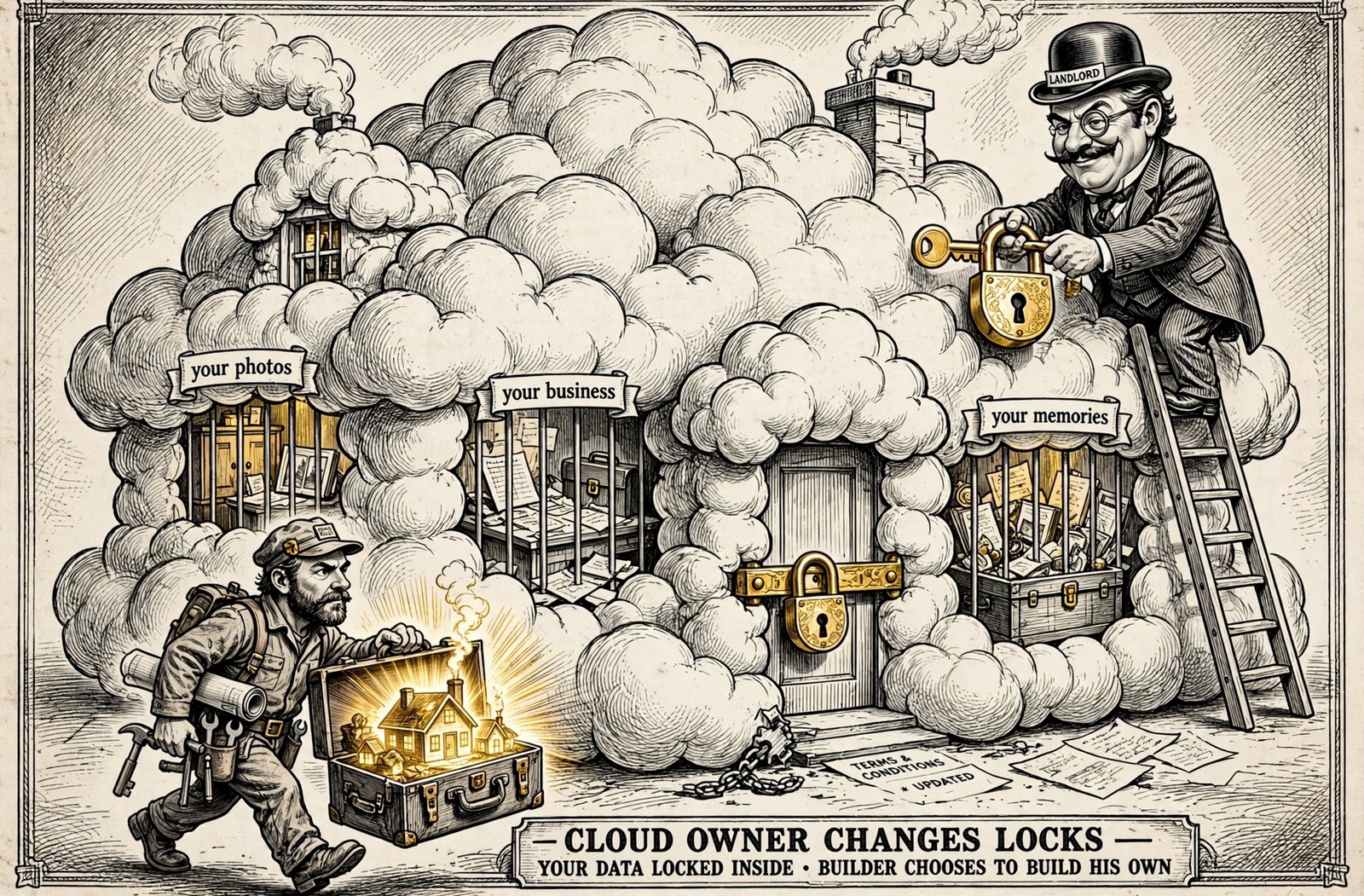
Sensitive data is anchored to iron you own and physically control — never surrendered to a rented cloud lease.

03

Trinary Bound™

Three execution states enforce data custody structurally — not by policy, by topology. Patent filed 2025.

04

Built for Fiduciaries

Architected for the law firms, medical offices, and family wealth offices that protect our community’s legacies.

The Doctrine
View all →
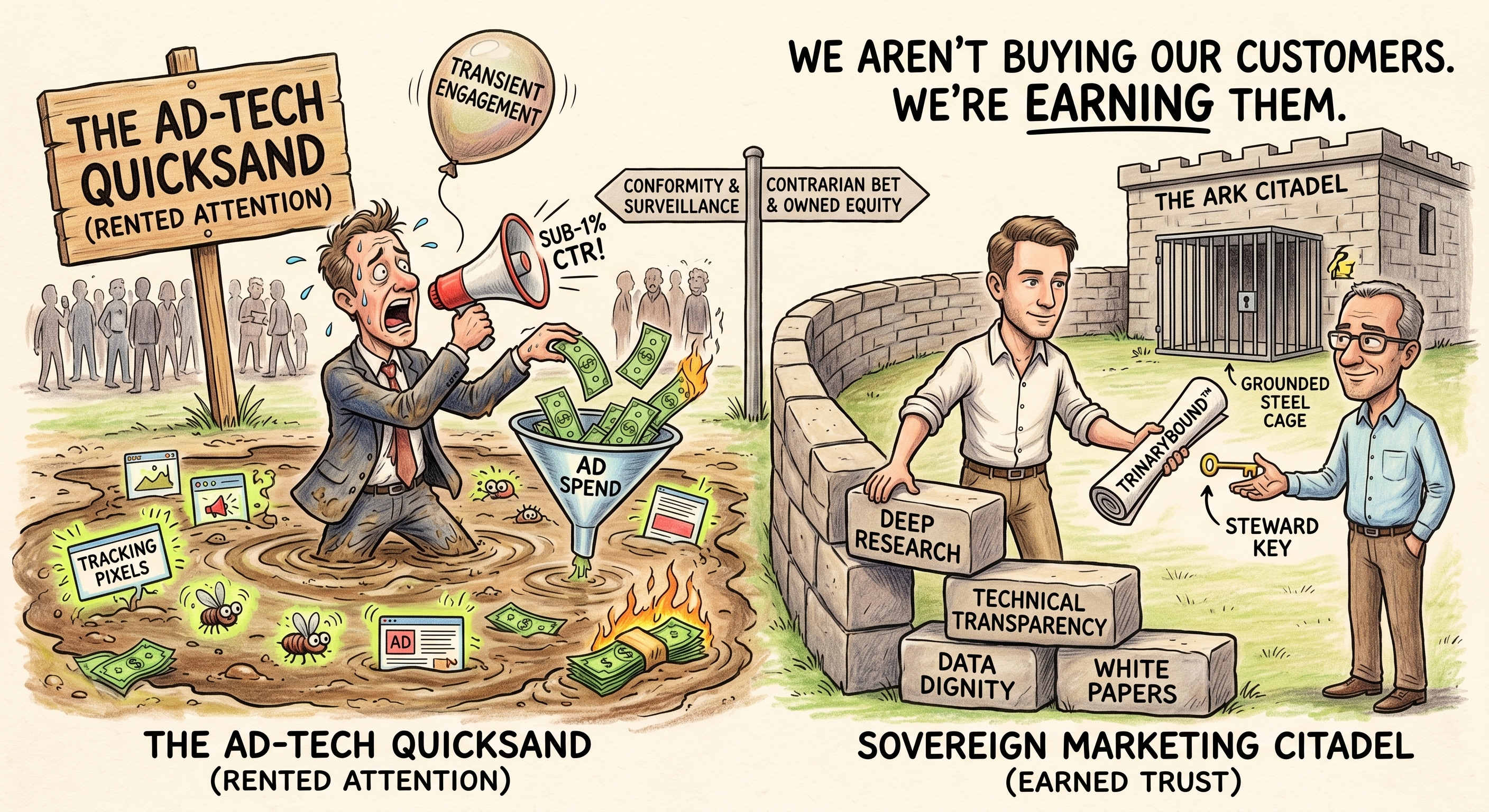
We Aren't Buying Our Customers. We're Earning Them.
Clear · Doctrine

We Aren't Buying Our Customers. We're Earning Them.

For a bootstrapped B2B startup, copying the enterprise ad-tech playbook is financial quicksand. The case for Sovereign Marketing — deep research, technical transparency, and absolute data dignity — over rented attention.

June 20267 min readRead →
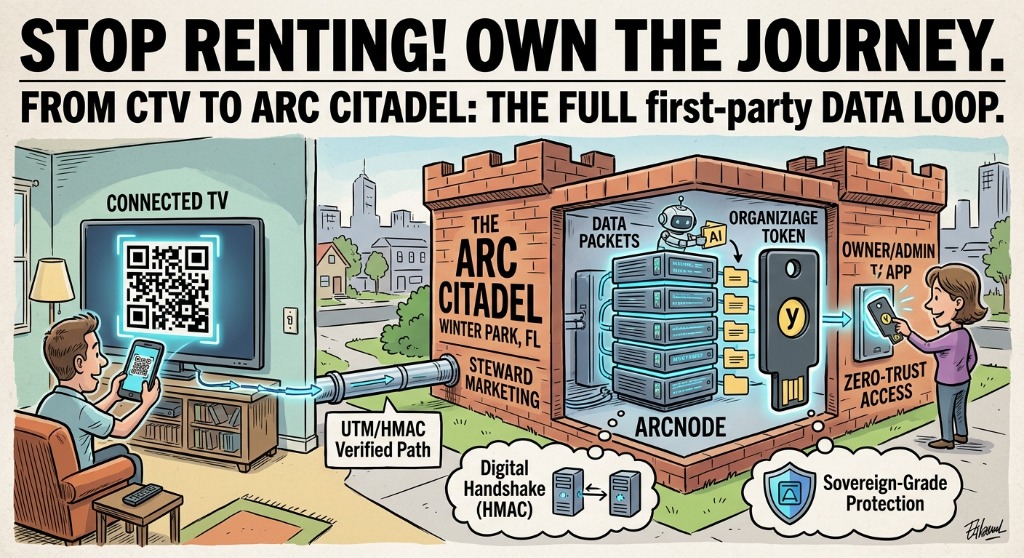
Beyond the Chip: Deploying the World's First Enterprise Trinary Topology
Clear · Doctrine

Beyond the Chip: Deploying the World's First Enterprise Trinary Topology

Silicon Valley treats "ternary" as a chip optimization trick. We deployed the world's first live Trinary Bound™ network topology into a fiduciary enterprise — three execution states that structurally enforce absolute data custody, backed by physical hardware keys.

May 20265 min readRead →

Live Signal · Updated 2026-06-24

Latest Sovereign Beacon™ Ratings

Each rating below is an editorial opinion grounded in cited public reporting, dated and methodology-bound. Click any card for the full Sovereign Beacon™ Grade Card on sovereignware.org — the canonical archive containing the full claim, named sources, methodology version, right-of-reply contact, and corrections log.

Editorial disclosure: opinion · cited · dated · methodology-bound · right-of-reply offered

Browse archive →
HardwareCritical

Flock Safety Falcon & Condor Cameras

Flock Safety's surveillance systems force constant video, situational telemetry, and audio captures straight to a unified vendor cloud. The hardware functions with zero standalone or isolated network profiles, meaning all device data feeds cross-agency searching without a distinct warrant. Investigations by civil liberties groups confirm updated contractual stipulations extend expansive corporate data brokerage permissions and drop previous 'no-sale' protections, pushing the hardware strictly to Critical.

Opinion · Cited sources · As of 2026-06-24

Score 1 / 5Full Grade Card →
HardwareClear

Pine64 PinePhone Pro

The PinePhone Pro places ultimate hardware control back in user hands. Beneath its removable rear case sit six physical DIP switches capable of disconnecting circuit lines for the cellular modem, Wi-Fi/Bluetooth chips, microphone, front camera, rear camera, and headphone jack. Because the entire platform runs on community-audited Linux operating systems with zero vendor-mandated cloud services or baked-in diagnostic telemetry pipelines, it achieves absolute local data sovereignty.

Opinion · Cited sources · As of 2026-06-24

Score 5 / 5Full Grade Card →
AppSovereign

Threema Mobile Messaging App

Threema uses an architecture that generates a unique, anonymous 8-digit Threema ID for each client instance, ensuring messaging maps and profile networks are isolated from cellular identity trails. Group structures and contacts are handled entirely client-side rather than centralized on remote servers. While its business model relies strictly on up-front application sales (avoiding ad-tech monetization vectors), it requires centralized routing infrastructure to sync and transit payload streams, capping its final tier at Clear.

Opinion · Cited sources · As of 2026-06-24

Score 4 / 5Full Grade Card →
AppWarning

Adobe Creative Cloud Applications

Adobe's modern software stack features mandatory integrations with its centralized Creative Cloud environments. Deep investigations into Adobe's service agreements reveal that standard accounts automatically opt creators into global 'Content Analysis' loops, allowing remote server arrays to scan active project binaries to refine generative algorithms. Because these diagnostic telemetry systems run out of the box and verification layers depend entirely on closed corporate trust, it drops to the Warning tier.

Opinion · Cited sources · As of 2026-06-24

Score 2 / 5Full Grade Card →
AI PlatformClear

AnythingLLM Framework

AnythingLLM functions completely isolated from vendor network arrays. All contextual documents, chat interaction histories, and embedded databases are maintained within the local disk space of the client machine. Anonymous telemetries are fully transparent and can be permanently deactivated within the initial settings window. Because it supports completely auditable open-source validation without mandatory external callbacks, it achieves a Sovereign rating.

Opinion · Cited sources · As of 2026-06-24

Score 5 / 5Full Grade Card →
AI PlatformCritical

Midjourney Generative AI

Midjourney lacks any local computing architecture, channeling all client image synthesis loops through commercial cloud rendering clusters. Its basic operating policies permanently retain image inputs, vector generations, and personal interaction profiles for internal platform optimization and modeling metrics. Because the pipeline relies on un-verifiable black-box processes, features no safe defaults, and functions entirely through a mandatory cloud network, it ranks at Critical.

Opinion · Cited sources · As of 2026-06-24

Score 1 / 5Full Grade Card →
SiteSovereign

SearXNG Metasearch

SearXNG establishes a proxy barrier between individual seekers and commercial web indexing structures. It discards user profile paths completely, omitting contextual search logs and script trackers. While private self-hosted instances can approach a sovereign footprint, general web deployment sites still require clear routing over standard web clouds to query data sources, capping the platform state firmly at Clear.

Opinion · Cited sources · As of 2026-06-24

Score 4 / 5Full Grade Card →
SiteWarning

LinkedIn Professional Network

LinkedIn utilizes a cloud framework optimized to chart behavioral networks. Policy reviews disclose that the platform deploys standard opt-out configurations for corporate AI modeling, automatically indexing user communications and resume assets to cultivate machine networks. Because the baseline system configurations operate unsafely without a manual adjustment, its placement settles at Warning.

Opinion · Cited sources · As of 2026-06-24

Score 2 / 5Full Grade Card →
Privacy LawSovereign

European Union Artificial Intelligence Act (EU AI Act)

The EU AI Act safeguards user autonomy by declaring automated biometric and predictive scoring architectures as 'unacceptable risks,' rendering them entirely prohibited across the European market. It establishes rigid machine-readability and transparency mandates on models to block covert content extraction. However, because it relies on centralized regulatory databases and allows specific law enforcement cloud exemptions in tracking public threats, it does not achieve local offline status, placing it at Clear.

Opinion · Cited sources · As of 2026-06-24

Score 4 / 5Full Grade Card →
Privacy LawCritical

US FISA Section 702 (RISAA Reauthorizations)

Section 702 serves as a sweeping domestic spy tool, compelling commercial electronic communication service providers to pipeline data signals to intelligence databases without individualized warrants. Modern reauthorizations (RISAA) have actively expanded the types of businesses forced to cooperate with state collection nodes. With persistent, documented internal agency violations and zero end-user verification vectors, it maps unequivocally to Critical.

Opinion · Cited sources · As of 2026-06-24

Score 1 / 5Full Grade Card →
HardwareSovereign

YubiKey

YubiKey is a physical cryptographic security key that executes authentication operations entirely on-chip within its secure element. The hardware has zero network capabilities, does not contain tracking firmware, and does not require a cloud connection to function. Rigorous third-party testing for its FIPS 140-2 certification in 2023 verified that its cryptographic keys are physically un-extractable, ensuring absolute sovereign possession.

Opinion · Cited sources · As of 2026-06-07

Score 5 / 5Full Grade Card →
HardwareSovereign

Purism Librem 5

The Purism Librem 5 is a security-focused smartphone that operates completely on local user-owned hardware with no mandatory cloud integrations. It features physical hardware kill switches that disconnect the camera, microphone, Wi-Fi, Bluetooth, and cellular baseband from power. Independent reviews and Privacy Guides have confirmed that its baseband processor is isolated from the main CPU, ensuring no background data harvesting can bypass user controls.

Opinion · Cited sources · As of 2026-06-07

Score 5 / 5Full Grade Card →
AI AppSovereign

PrivateGPT

PrivateGPT is an open-source AI application designed to provide a completely offline conversational interface for document analysis. Since the application, embedding database, and LLMs execute entirely on local CPU/GPU hardware, no telemetry or prompt history is transmitted to any cloud servers. The full source is auditable on GitHub and the project explicitly documents that no remote API requests are made during ingestion or inference, ensuring physical and cryptographic custody of sensitive files.

Opinion · Cited sources · As of 2026-06-07

Score 5 / 5Full Grade Card →
AppClear

Mullvad VPN

Mullvad VPN is an application and routing service designed with absolute privacy-by-design principles, requiring no email address or personal details to register. Although it routes traffic through a cloud infrastructure, the service is built to prevent user data logging or profiling. In April 2023, a Swedish police search of Mullvad's offices demonstrated that the company stores zero customer data, as the authorities were unable to retrieve any user logs.

Opinion · Cited sources · As of 2026-06-07

Score 4 / 5Full Grade Card →
AppClear

Bitwarden

Bitwarden is an open-source credential manager that secures all user data with zero-knowledge, client-side encryption before syncing to the cloud. Its software architecture is fully open for public audit, and the company routinely publishes third-party security assessments. An independent code audit completed in 2024 confirmed that the cryptographic implementation is robust and that Bitwarden has no ability to decrypt or profile customer vaults.

Opinion · Cited sources · As of 2026-06-07

Score 4 / 5Full Grade Card →
SiteClear

ProtonMail

ProtonMail provides zero-access encrypted email storage, meaning messages are encrypted client-side before being written to Proton's Swiss-based servers. An independent cryptographic audit completed in late 2024 confirmed that the web interface handles encryption processes correctly without leaking private keys. Because it relies on a trusted external operator, it does not achieve true sovereign status, but its structural design prevents data profiling.

Opinion · Cited sources · As of 2026-06-07

Score 4 / 5Full Grade Card →
SiteClear

Brave Search

Brave Search is an independent search engine that operates on its own proprietary web index without building user behavioral profiles or tracking queries. The platform serves search results without utilizing third-party cookies or scripts that monitor cross-site behavior. In mid-2023, Brave officially removed all remaining Bing search API dependencies, making its search results completely independent of major surveillance-based search providers.

Opinion · Cited sources · As of 2026-06-07

Score 4 / 5Full Grade Card →
AppWarning

macOS with iCloud

Apple's macOS operates locally but automatically prompts users to sync highly sensitive personal files, photos, and keychains to iCloud servers under default settings. In January 2023, the French regulator CNIL fined Apple 8 million euros for failing to obtain explicit user consent before presenting personalized App Store advertisements. Achieving a secure environment requires users to manually activate Advanced Data Protection and disable telemetry tracking.

Opinion · Cited sources · As of 2026-06-07

Score 2 / 5Full Grade Card →
AI AppCritical

Perplexity AI

Perplexity AI is a conversational search engine that depends entirely on continuous cloud extraction and real-time indexing of web content. Its default terms allow the collection of user search habits, prompt history, and diagnostic data to train internal models. In mid-2024, a Wired investigation revealed that Perplexity bypassed standard robots.txt exclusions and scraped private sites without authorization. Since the platform's core model depends on aggressive data crawling and default logging, user configuration cannot guarantee complete privacy.

Opinion · Cited sources · As of 2026-06-07

Score 1 / 5Full Grade Card →
AppCritical

Temu

Temu is an e-commerce application that operates on a business model driven by aggressive data extraction and consumer tracking. A June 2023 US Select Committee report highlighted major concerns regarding Temu's parent company, PDD Holdings, and its potential to harvest comprehensive mobile device data. In 2024, multiple consumer protection lawsuits were filed alleging that the application accesses contact lists, locations, and search histories without authorization.

Opinion · Cited sources · As of 2026-06-07

Score 1 / 5Full Grade Card →